شمس المعارف الكبرى
Shams al-Maʿārif al-Kubrā
The Cairo printing of 1345 AH (1926–27), restored · Hardcover · In Arabic
Copied, condemned and kept for centuries. Here it is whole, as Cairo set it in type in 1345 AH (1926–27).
604 leaves592 facsimile pages7 × 10 inone volume
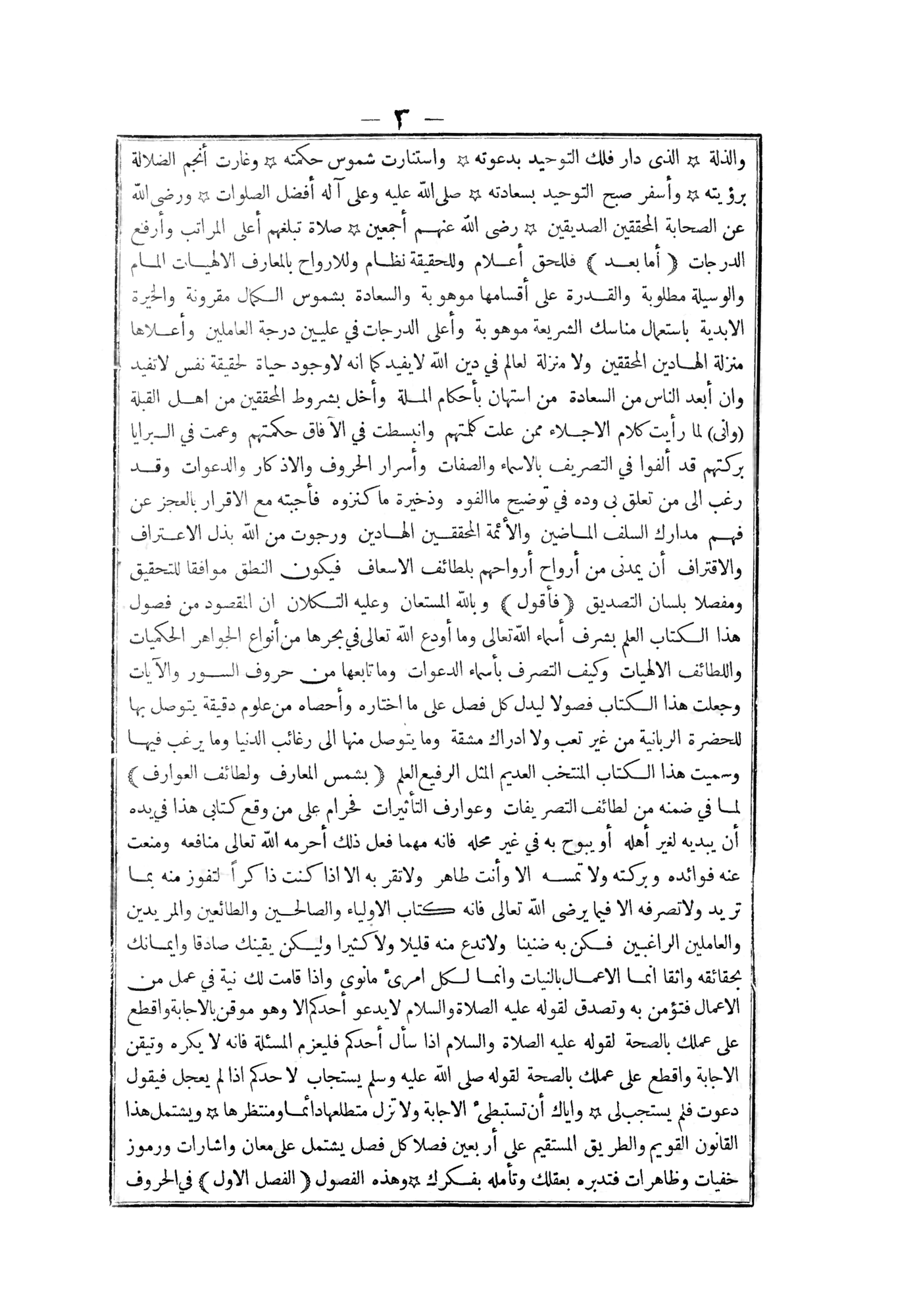
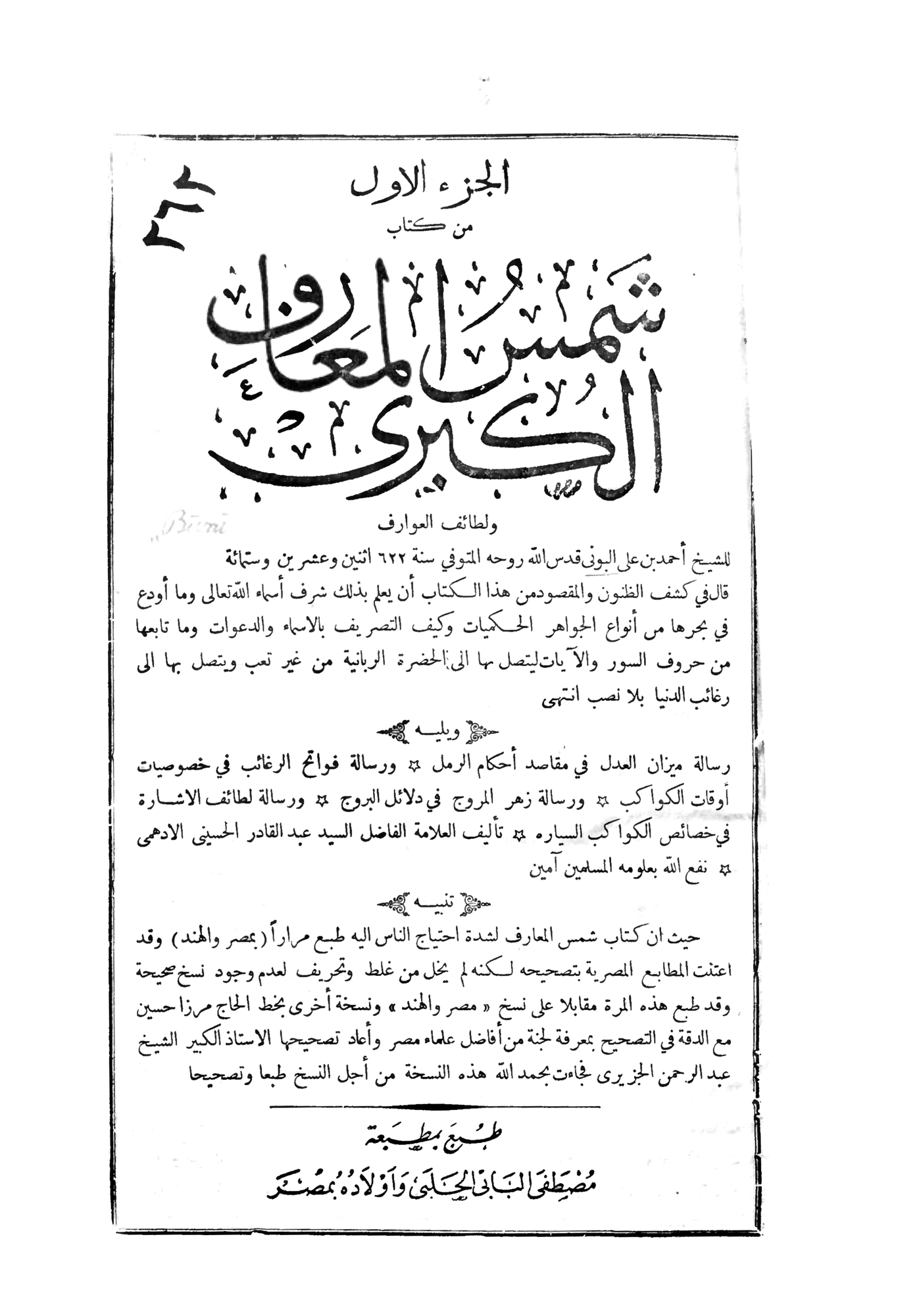
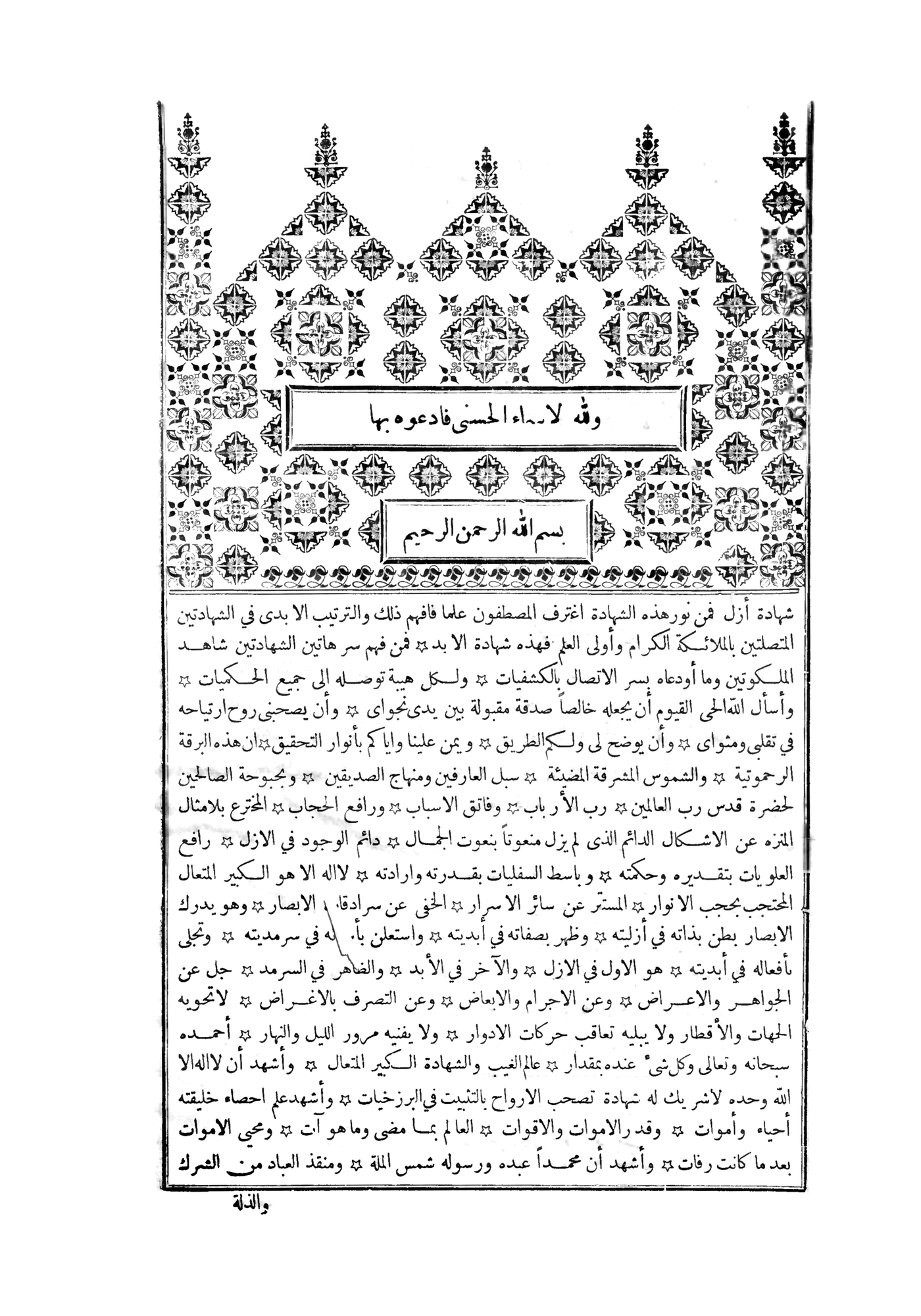



Shams al-Maʿārif al-Kubrā
The Cairo printing of 1345 AH (1926–27), restored
Sun of Gnosis
Some books are read. This one was kept.
For readers of the tradition, and for anyone drawn to how such a book was made and kept.
The page as it was set.
I · The page
The page, at the size it is printed
We did not improve the book. We took off what a hundred years put on top of it.
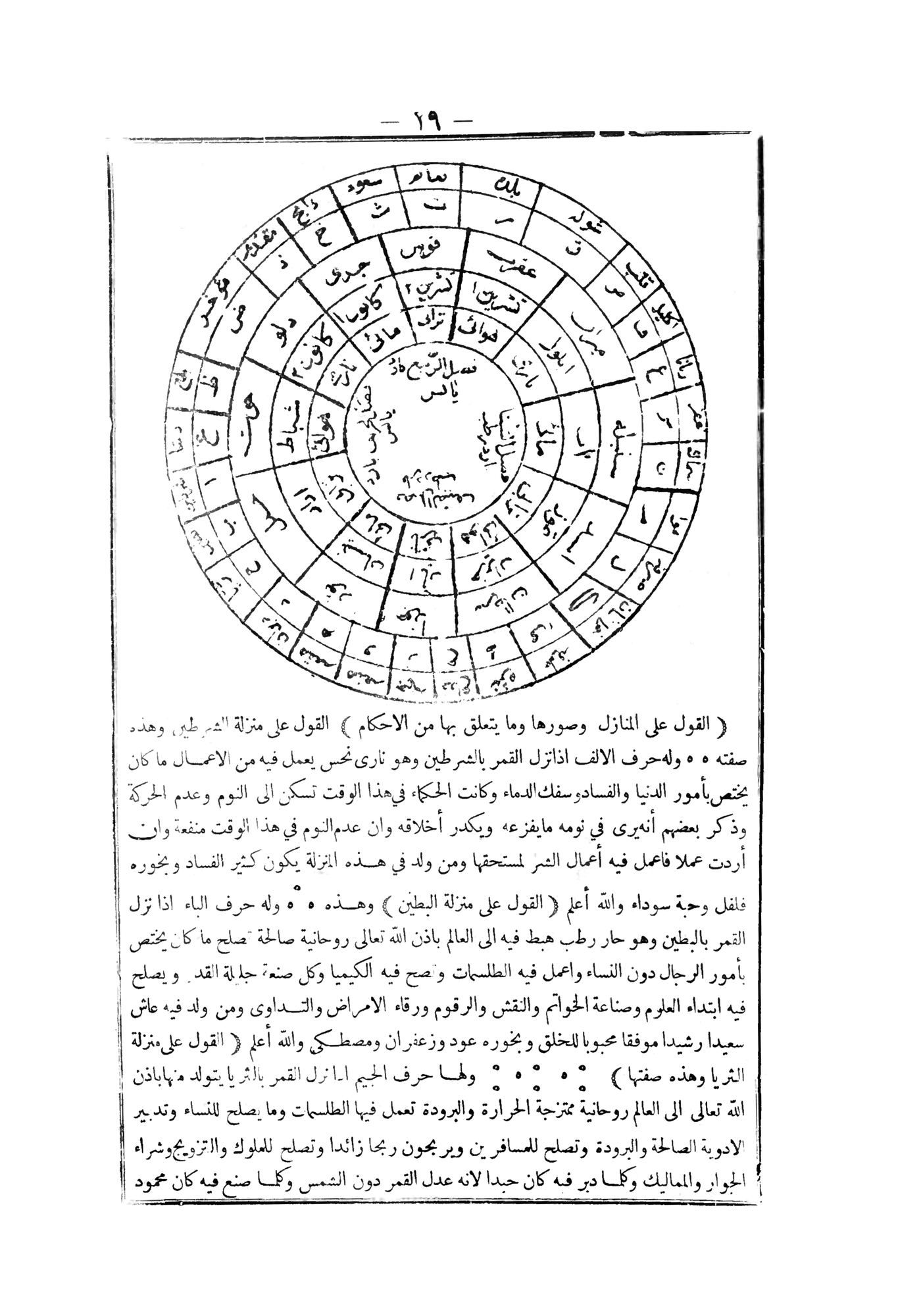
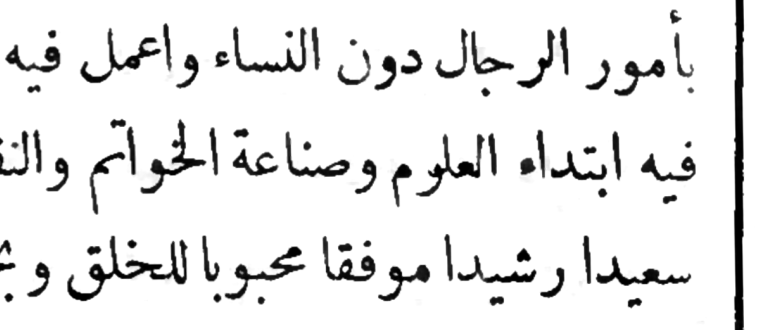
Scroll sideways to see the whole line.
II · The plates
What the pages hold
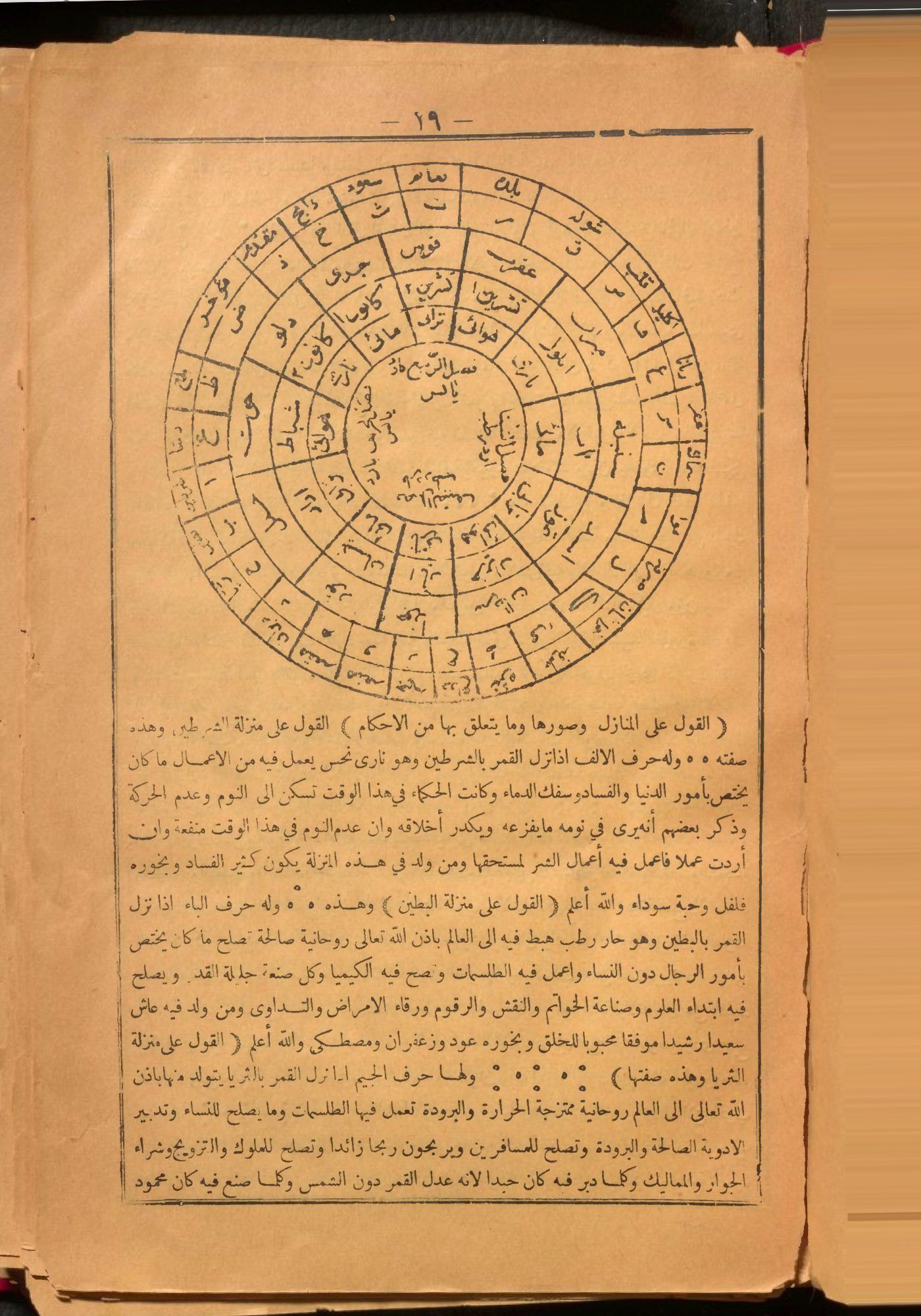
Squares of numbers, wheels of letters, tables of names: the awfāq and the ḥawāṣṣ. They run through all four parts; these eight are in the book's own order, from right to left.
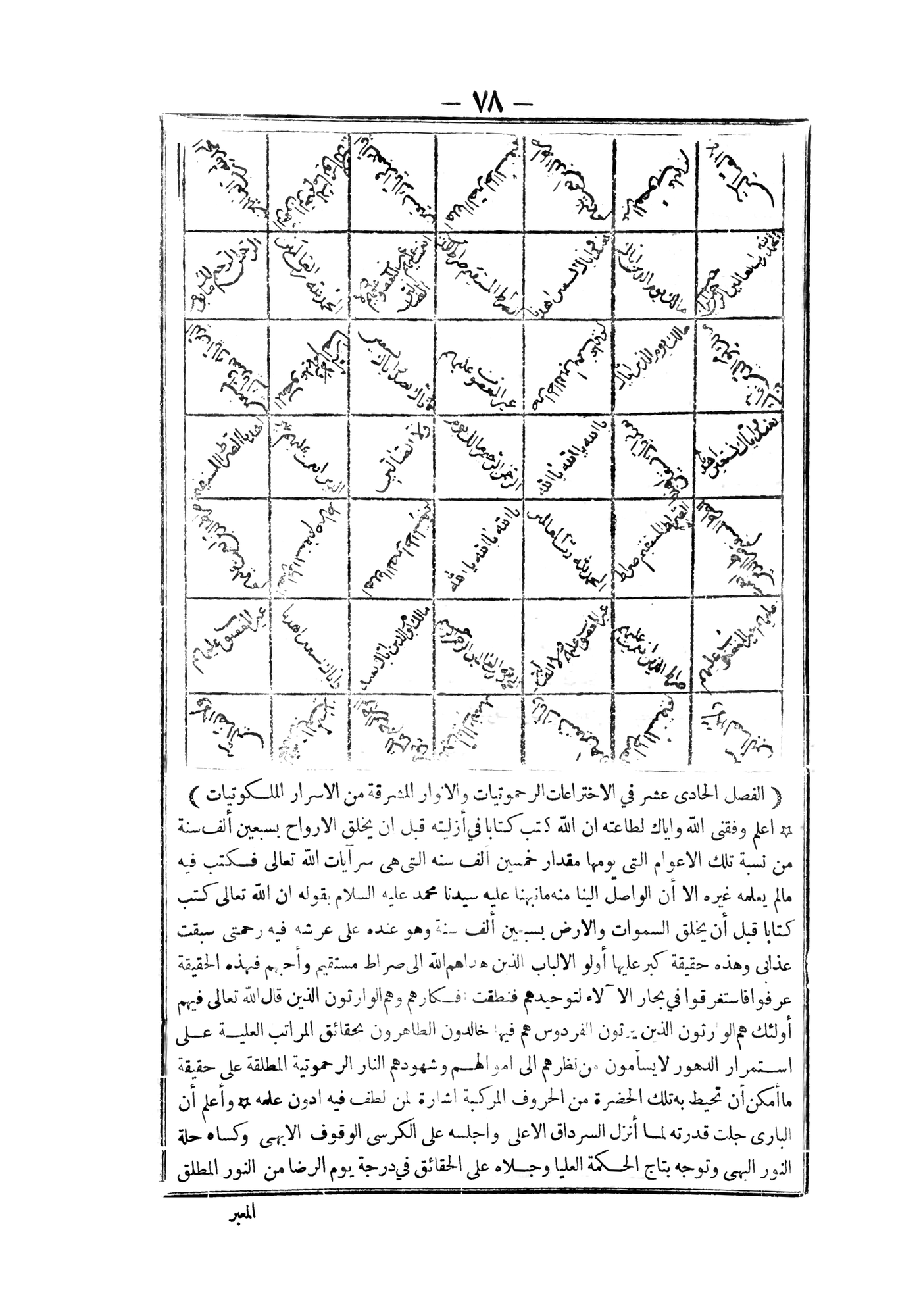
— ٧٨ —Page 78Shams al-Maʿārif al-Kubrā — Cairo: Muṣṭafā al-Bābī al-Ḥalabī, 1345 AH — page 78 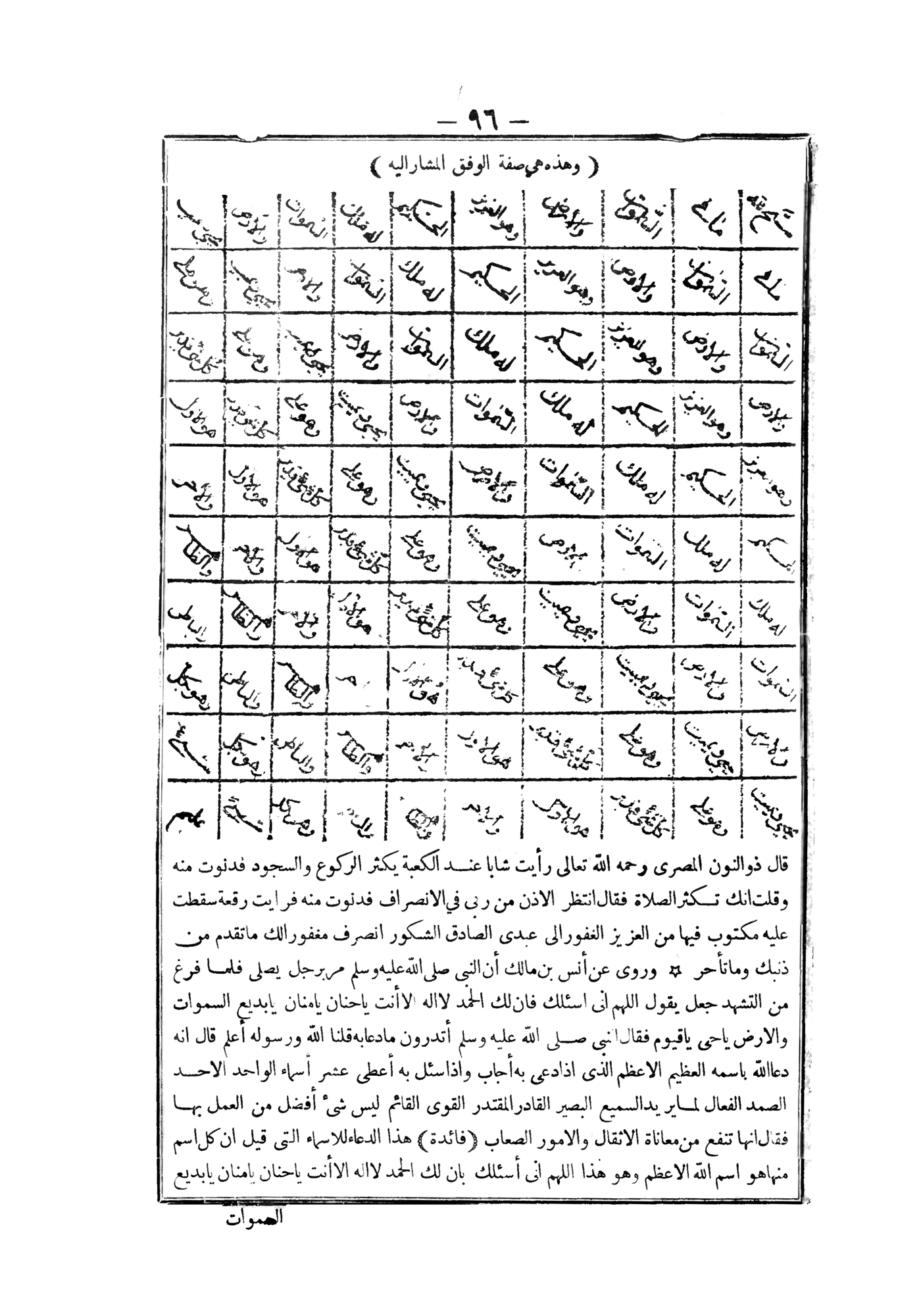
— ٩٦ —Page 96Shams al-Maʿārif al-Kubrā — Cairo: Muṣṭafā al-Bābī al-Ḥalabī, 1345 AH — page 96 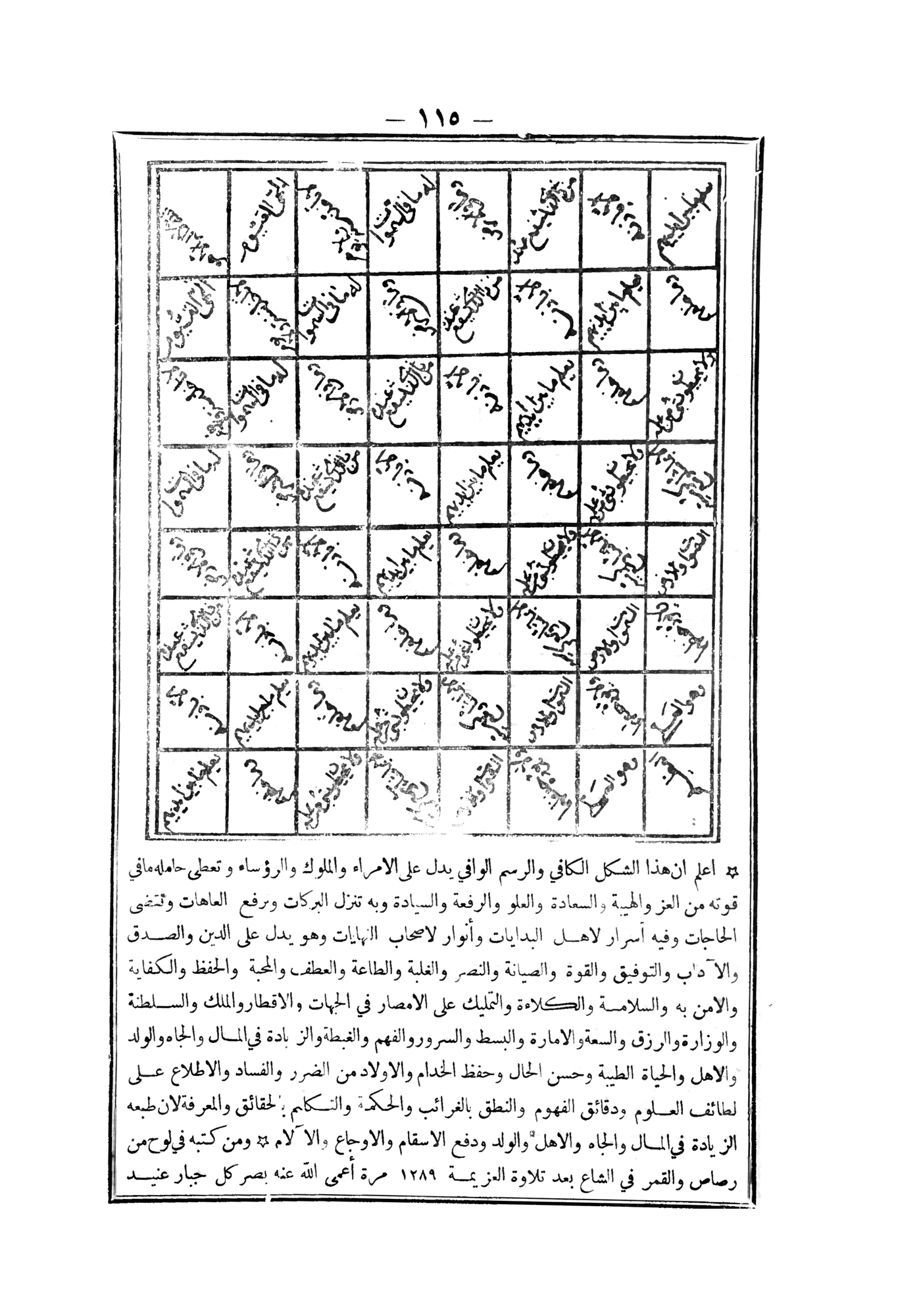
— ١١٥ —Page 115Shams al-Maʿārif al-Kubrā — Cairo: Muṣṭafā al-Bābī al-Ḥalabī, 1345 AH — page 115 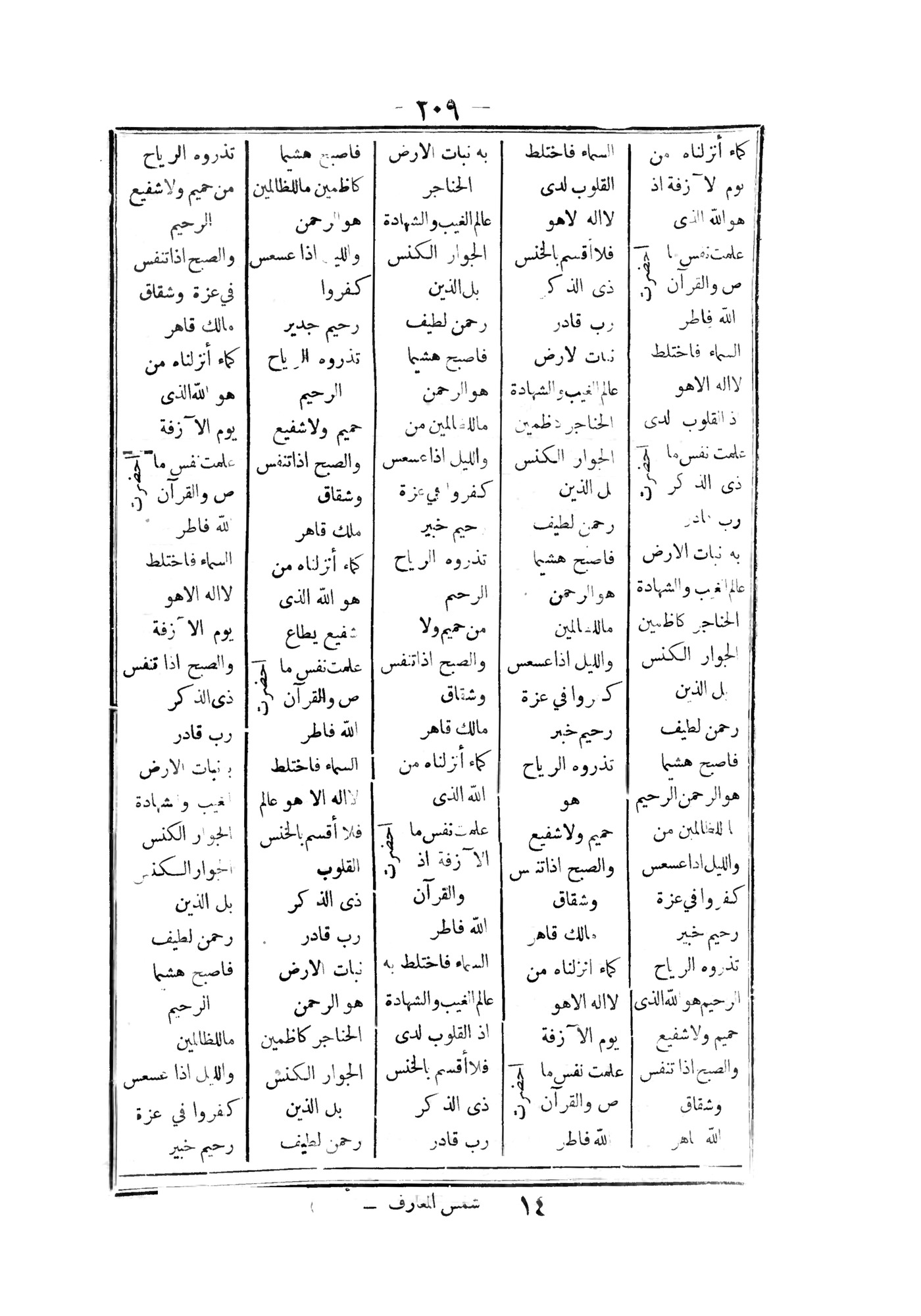
— ٢٠٩ —Page 209Shams al-Maʿārif al-Kubrā — Cairo: Muṣṭafā al-Bābī al-Ḥalabī, 1345 AH — page 209 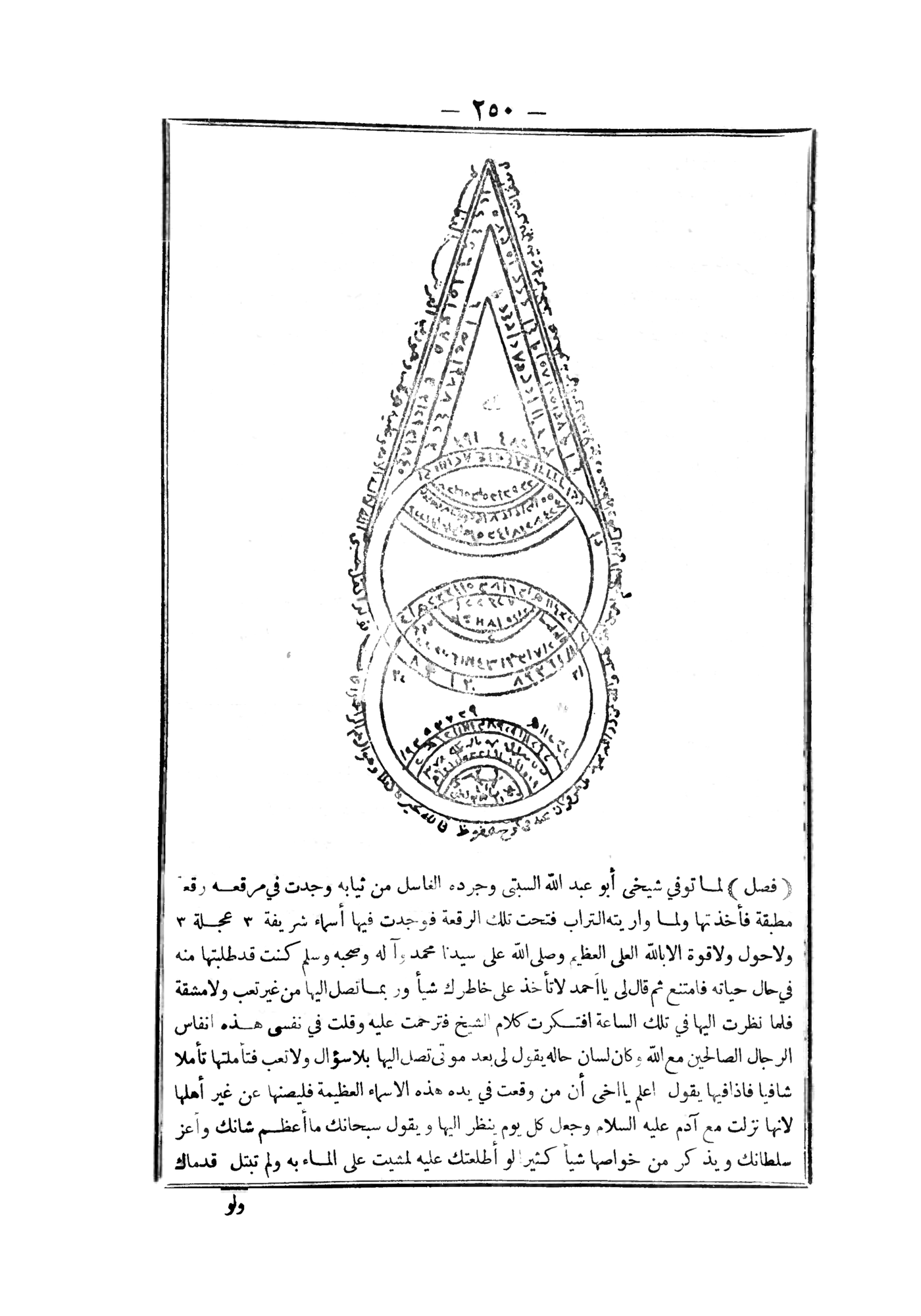
— ٢٥٠ —Page 250Shams al-Maʿārif al-Kubrā — Cairo: Muṣṭafā al-Bābī al-Ḥalabī, 1345 AH — page 250 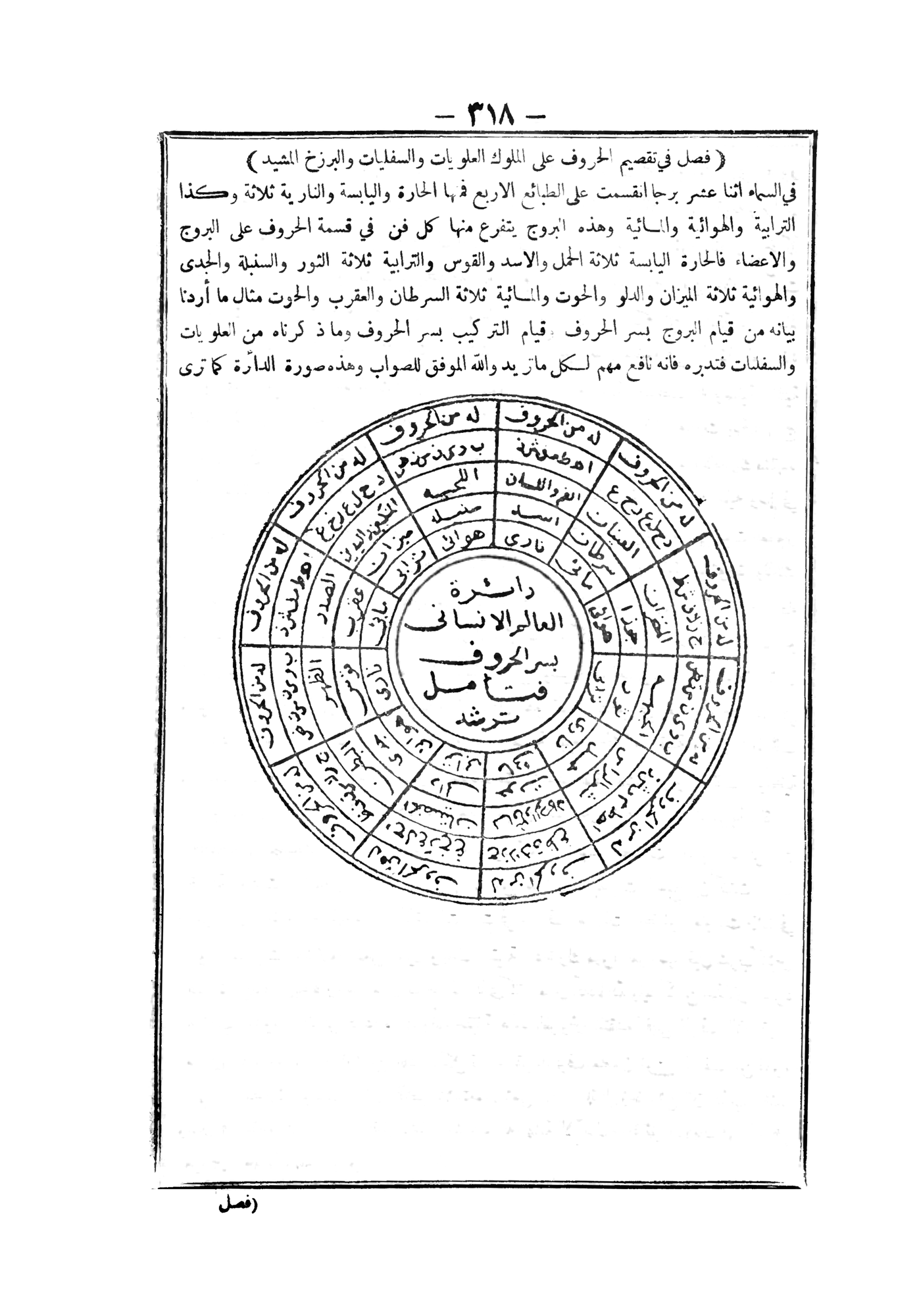
— ٣١٨ —Page 318Shams al-Maʿārif al-Kubrā — Cairo: Muṣṭafā al-Bābī al-Ḥalabī, 1345 AH — page 318 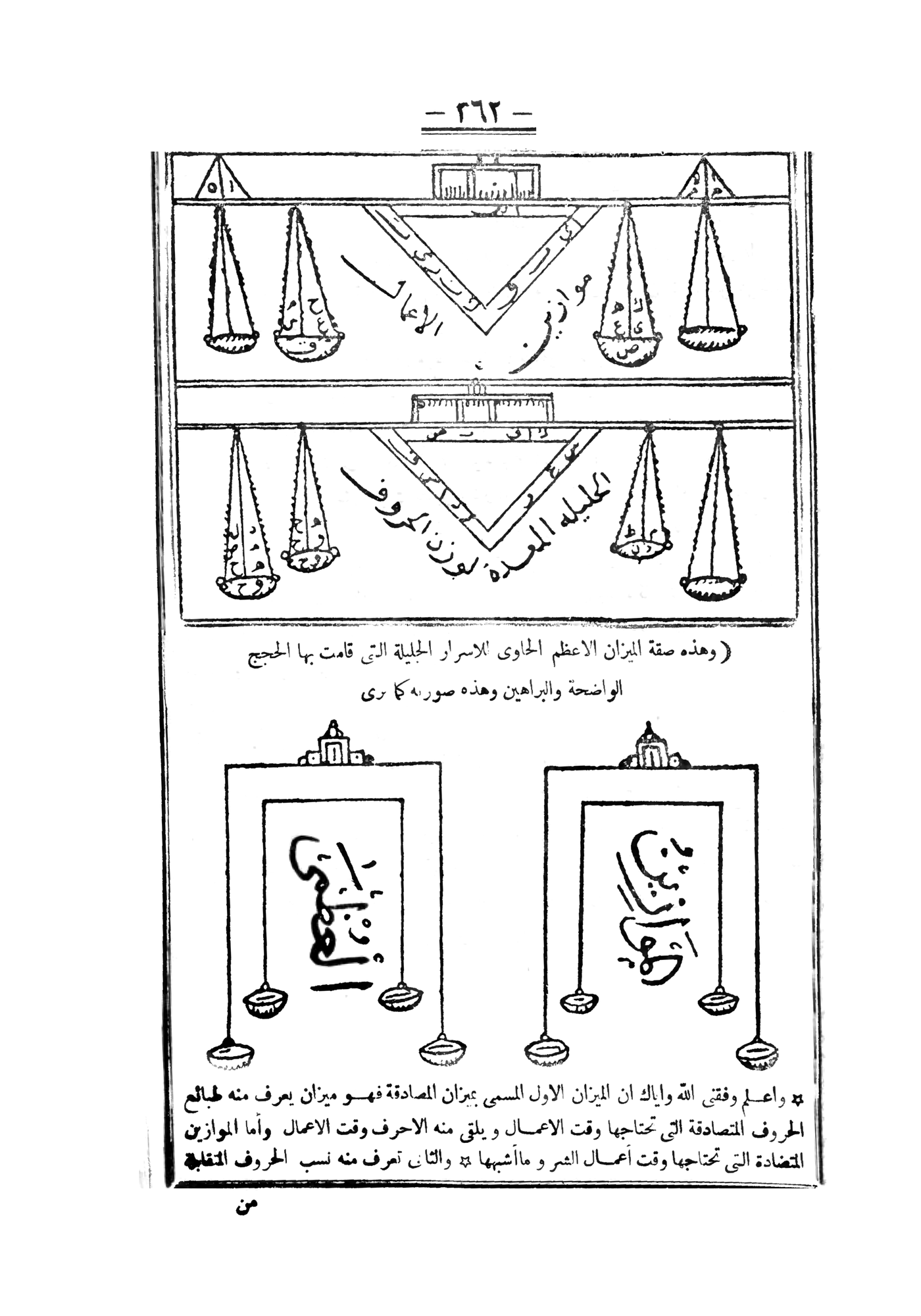
— ٣٦٢ —Page 362Shams al-Maʿārif al-Kubrā — Cairo: Muṣṭafā al-Bābī al-Ḥalabī, 1345 AH — page 362 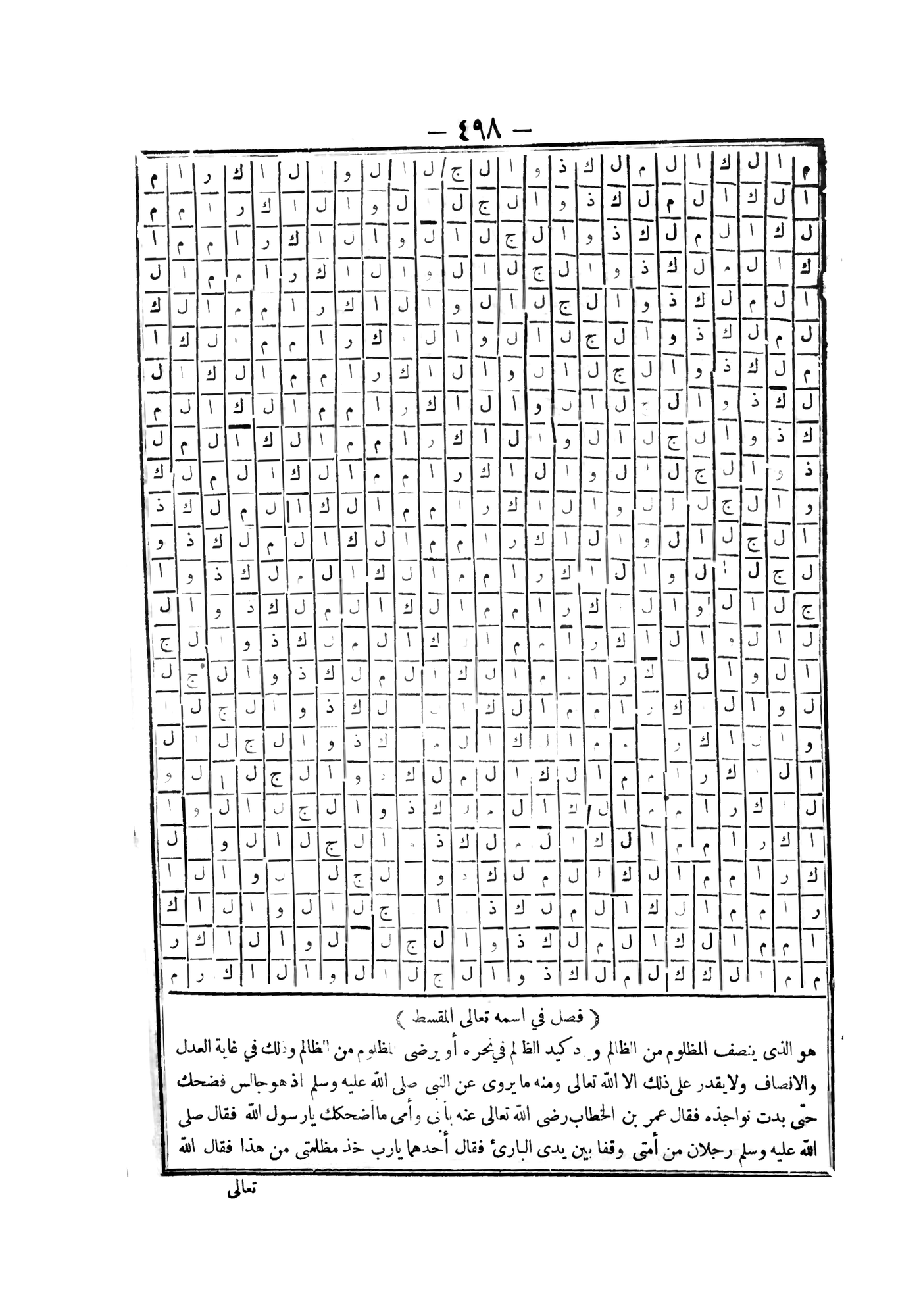
— ٤٩٨ —Page 498Shams al-Maʿārif al-Kubrā — Cairo: Muṣṭafā al-Bābī al-Ḥalabī, 1345 AH — page 498
The uneven inking, the show-through and the spots in the paper belong to the sheets of 1345 AH (1926–27), and the page keeps them.
III · The volume
The printing and the edition
Hardcover · 7 × 10 in · 592 facsimile pages · cream paper · in Arabic
The printing
- Work
- Shams al-Maʿārif al-Kubrā wa-Laṭāʾif al-ʿAwārif, the Great Sun of Knowledge, under the name of Aḥmad ibn ʿAlī al-Būnī (d. 622 AH, 1225). Who gathered the long version under his name is not known.
- Printing
- Muṣṭafā al-Bābī al-Ḥalabī and Sons, Cairo, 1345 AH (1926–27).
- Contents
- Four parts in one volume: 535 pages, then four treatises by ʿAbd al-Qādir al-Adhamī, then the printer's 16-page index.
- Source copy
- A complete set of the Cairo printing: 604 leaves, the index among them.
This edition
- Format
- 7 × 10 inches (178 × 254 mm), 592 facsimile pages, cream paper.
- Binding
- Hardcover, the case printed in oxford red with the title and ornaments in gold ink, matte finish.
- Type
- The Cairo compositors' own, as they set it in 1345 AH.
- Availability
- Printed and bound for each order.
- With it
- A PDF of the restored pages, sent when your copy is sent.
IV · The making
From the Cairo sheets to the bound book
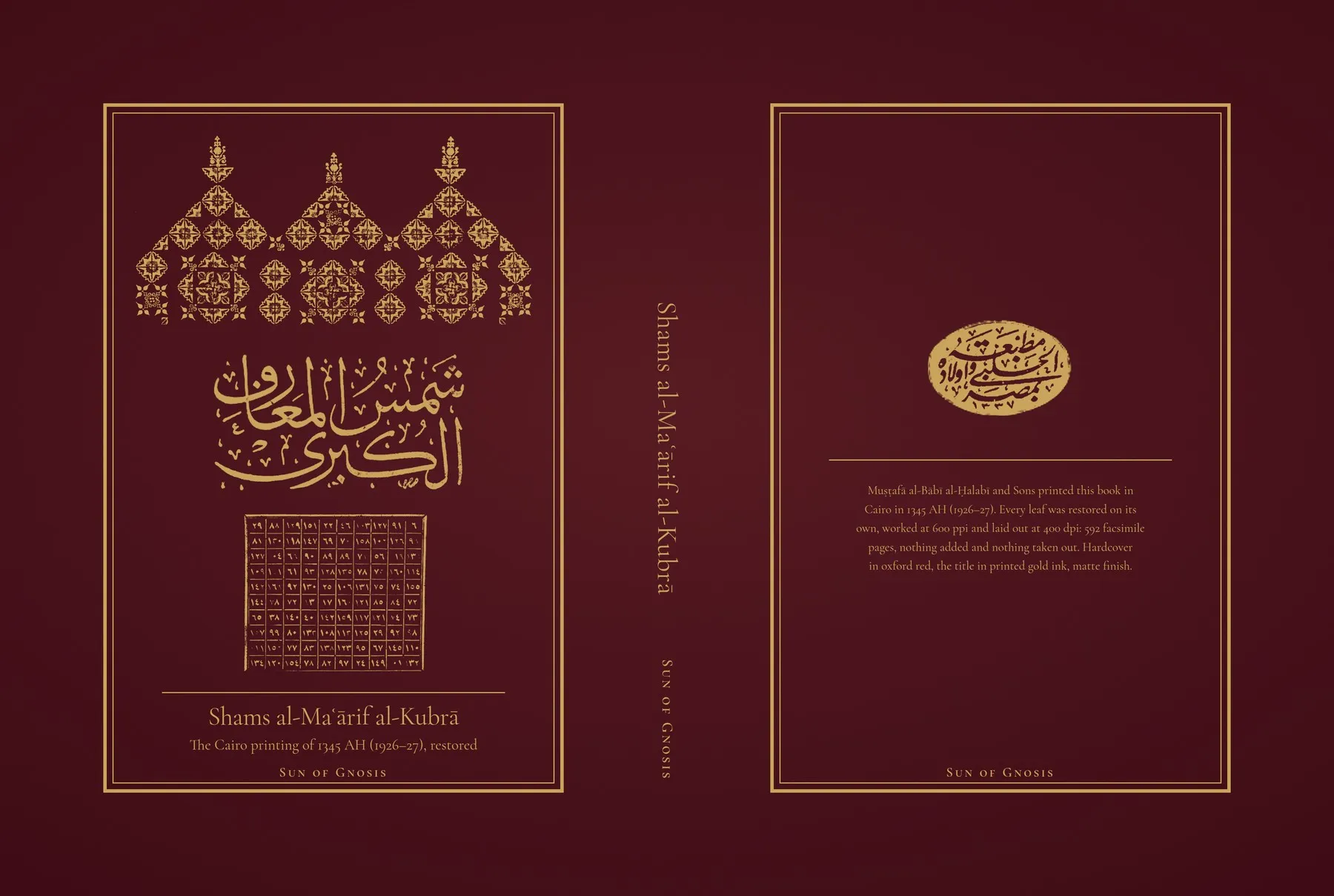
The case is one continuous sheet — back, spine and front — printed in oxford red and gold and finished matte over the boards.
- The sheets
- 604 leaves of one complete set of the Cairo printing, each taken at 600 ppi.
- The restoration
- One leaf at a time: straightened, the browned paper taken back to white, the printed frame found, the shadow of the old binding cleared. Nothing inside the frame was redrawn.
- The page
- Each leaf placed on a 7 × 10 inch page at 400 dpi, near the size Cairo printed it.
- The block
- 592 pages laid out right to left, as the book reads, so the bound volume opens from the right.
- The case
- Hardcover, oxford red, the title in gold ink on the printed case, matte finish.
Printed in black on cream, as the Cairo page was printed in black: the 1345 printing has no colour and no photographs, and this edition adds none.
V · Every page, accounted for
Every page, accounted for
Every one of the 604 leaves was restored on its own and checked by eye, one at a time, before it took its place in the book. Each was worked at 600 ppi and laid out at 400 dpi.
535 printed pages + four treatises + the printer's 16-page index = 592 facsimile pages
The catchwords are still there. So are the signature lines, and the twelve folios the press numbered wrong.
As it was printed
- The Arabic text, page for page.
- The printer's own index, in Arabic.
- No commentary on the text.
- Nothing added to the 1345 printing, and nothing taken out of it.
Order
One edition, in one binding, printed for each reader who orders it.
$119
US dollars, before shipping and any tax.
Orders are not open at the moment. The twenty-three pages below are yours to read now.
Twenty-three pages first
The title page, the opening with its list of forty chapters, the whole first chapter and eleven plates, as a PDF. Then a letter when this book can be ordered, and one when the next title is set in type.
The pages are yours.
Twenty-three restored pages: the title page, the opening with its list of forty chapters, the whole first chapter, and eleven plates.
You are on the list. We will write when this book can be ordered, and once more when the next title is set in type.
Questions
What is this edition?
A facsimile of the Cairo printing of Shams al-Maʿārif al-Kubrā, issued by Muṣṭafā al-Bābī al-Ḥalabī and Sons in 1345 AH (1926–27), restored page by page and bound as one hardcover volume. Every printed page is here, in the Cairo compositors' own Arabic type: 592 facsimile pages. A PDF of the restored pages is sent with your copy.
What is in the book?
The divine names, the science of letters and the making of squares, in forty chapters, with the awfāq and the ḥawāṣṣ set out in tables, wheels and squares through all four parts. After al-Būnī's text come four treatises by ʿAbd al-Qādir al-Adhamī, then the printer's own 16-page index. The book has been copied, forbidden and argued over for centuries; this edition gives it as Cairo printed it, and leaves the reading to the reader.
Who wrote it?
It carries the name of Aḥmad ibn ʿAlī al-Būnī, who died in 622 AH (1225). The long version was gathered under his name by hands no one has identified, and that open question is part of the book's history. The 1345 printing gives the text as Cairo received it.
What was done to the pages?
Each of the 604 leaves of a complete set of the Cairo printing was worked on its own: straightened, its browned paper taken back to white, the shadow of the old binding cleared. Nothing inside the printed frame was redrawn. Each page is printed at 7 × 10 inches, close to the size Cairo printed it, so the letters in the tables and squares read as the press set them. The twenty-three pages show it at full size.
What language is it in?
Arabic, page for page as Cairo printed it, with the printer's own index. There is no translation and no commentary: the book is the 1345 printing itself.
How is it bound?
As a hardcover, 7 × 10 inches (178 × 254 mm), on cream paper. The case is one printed sheet in oxford red, with the printer's headpiece, the calligraphic title and a square of numerals in gold ink, finished matte. It opens from the right, as an Arabic book does.
How does it differ from other copies of the book?
It is the whole of one printing, not a selection from it: al-Būnī's text, al-Adhamī's four treatises and the printer's index, 592 facsimile pages in one volume. The Arabic is the Cairo compositors' own type, with its catchwords, signature lines and misnumbered folios kept where the press left them. Every leaf was restored and checked on its own before it took its place in the book.
Can I order a copy now?
Orders are not open at the moment. Each copy is printed and bound for the reader who orders it, so there is no stock to reserve. The twenty-three pages are yours to read now, and if you join the list we will write when orders open.
What if it arrives damaged?
We print and send you another at our cost. Write to hello@sunofgnosis.com with a photograph of the damage or the printing fault.
Whole, as Cairo set it.